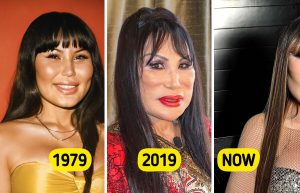
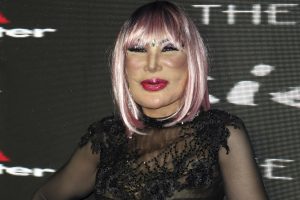
Lyn May, the Chinese-Mexican showgirl famously known as “The Goddess of Love,” occupies a singular place in Mexican popular culture. With her bold stage presence, striking beauty, and fearless sensuality, she captivated audiences for decades and appeared in nearly 100 films. Rising to prominence during the golden era of cabaret and Ficheras cinema, Lyn became an emblem of glamour, excess, and unapologetic self-expression. Yet her public image, so closely tied to beauty and desire, would later become the source of deep personal struggle. In the 1990s, a cosmetic procedure meant to preserve her youthful appearance went disastrously wrong. Instead of subtle enhancement, she was left with visible lumps and facial damage that permanently altered her looks. “I was given injections of water, baby oil, or cooking oil,” she later revealed, exposing a painful chapter in her life that reflected both exploitation within the beauty industry and the harsh expectations placed on women in the public eye.
Born Lilia Guadalupe Mendiola Mayares in 1952, Lyn May’s early life was far removed from fame and luxury. Raised in difficult circumstances, she learned resilience early, shaped by economic hardship and emotional challenges. As a young woman, she married an American sailor, hoping for stability and a new beginning. Instead, the marriage ended after five years amid allegations of abuse, leaving her emotionally scarred but determined to survive on her own terms. Following the divorce, she relocated to Acapulco, a city pulsing with nightlife, tourism, and opportunity. It was there that she discovered dance as both an escape and a calling. Her performances quickly drew attention, and she began building a reputation that would soon carry her to the heart of Mexican entertainment. Acapulco marked her transformation from a struggling young woman into a rising star.
Lyn’s ascent in Mexican cinema was swift and decisive. She became one of the most recognizable faces of the Ficheras genre, a uniquely Mexican blend of comedy, music, and eroticism that flourished in the 1970s and 1980s. These films, often dismissed by critics, were enormously popular with audiences and served as a cultural mirror of their time. Lyn stood out even among her peers, not only for her beauty but for her charisma and confidence. She embodied desire without apology, projecting control over her image and body in an industry that often sought to exploit both. Her screen presence was magnetic, and her performances balanced humor, seduction, and strength. For many fans, she represented freedom and defiance, a woman who owned her sexuality in a conservative society.
Behind the glamour, however, Lyn’s personal life was marked by profound pain and loss. Her second husband, businessman Antonio Chi Su, became a central figure in her emotional world. When he died of cancer in 2008, the loss devastated her. In her grief, Lyn made a shocking admission years later, stating that she had exhumed his body and slept beside him. The statement stunned the public and was widely debated, interpreted by some as a cry of anguish rather than literal truth. Whether symbolic or factual, the confession revealed the depth of her suffering and the intensity of her attachment. It also underscored how fame had never insulated her from heartbreak. Her openness about grief, however unconventional, offered a glimpse into the loneliness that often shadows public adoration.
In 2021, Lyn May once again found herself at the center of media attention when she announced that she was pregnant at the age of 68. The story spread rapidly, igniting disbelief, curiosity, and speculation around the world. It was later revealed to be a publicity stunt, a performance that blurred the line between reality and spectacle. While some criticized the announcement as misleading, others saw it as consistent with Lyn’s lifelong relationship with attention and reinvention. Throughout her career, she had understood the power of narrative, shock, and image. Even in later life, she remained unwilling to fade quietly into obscurity. The episode highlighted both the pressures faced by aging women in entertainment and Lyn’s refusal to conform to expectations of invisibility.
Despite controversy, tragedy, and physical transformation, Lyn May remains a powerful symbol in Mexican pop culture. Her life reflects the complexities of fame, the cost of beauty standards, and the resilience required to survive both public judgment and private pain. She has lived unapologetically, embracing reinvention even when it came at great personal cost. To her fans, she is more than a performer; she is a survivor who endured exploitation, loss, and scrutiny while continuing to assert her presence. Lyn May’s legacy is not defined solely by her films or her image, but by her defiance of erasure. In a world quick to discard women once their beauty changes, she remains visible, controversial, and unforgettable—a testament to the enduring power of self-determination.