Claudia Cardinale’s life and career form one of the most remarkable journeys in the history of international cinema. Spanning more than six decades, her story is not only about fame and artistic achievement, but also about resilience, personal struggle, independence, and the quiet strength required to survive within an industry that often demanded conformity. She emerged during a transformative era of European film, when Italian cinema in particular was gaining global recognition through directors who would redefine storytelling on screen. Cardinale became one of the faces of that golden age, yet her path to stardom was anything but straightforward.
Born in Tunis, Tunisia, in 1938 to Sicilian parents, Cardinale grew up in a multicultural environment shaped by both North African and Italian influences. This dual heritage would later contribute to her unique screen presence—one that felt both exotic and familiar to international audiences. As a young girl, she initially had no ambitions of becoming an actress. In fact, she reportedly dreamed of becoming a schoolteacher and living a quiet, ordinary life far removed from the world of cinema. However, fate intervened in a way that would alter the trajectory of her entire life.
At the age of 18, she was unexpectedly thrust into the public eye after winning a beauty contest in Tunisia titled “Most Beautiful Italian Girl in Tunisia.” The competition was originally intended as a local cultural event, but it attracted attention from Italian film producers searching for fresh faces to represent a new generation of actresses. Cardinale’s striking appearance, natural charisma, and expressive eyes immediately set her apart. The prize she received was not just recognition, but an invitation to the Venice Film Festival, where she was introduced to the world of Italian cinema.
This moment marked the beginning of her career in film. Almost immediately, she was offered small roles, though her entry into the industry was complicated by circumstances in her personal life. At just 18 years old, she became pregnant following a traumatic assault, an event she kept private for many years. In an era when public image was tightly controlled and scandal could destroy careers, she made the difficult decision to protect both herself and her child by concealing the truth from the public. Her son, Patrick, was initially raised under the belief that he was her younger brother, a secrecy that would weigh heavily on Cardinale throughout her early career.
Despite these personal challenges, her rise in cinema continued. The Italian film industry of the late 1950s and early 1960s was flourishing, with directors such as Federico Fellini, Luchino Visconti, and Mario Monicelli reshaping global perceptions of film artistry. Cardinale found herself working within this extraordinary creative environment, quickly gaining recognition for her natural acting style and emotional depth. Unlike many actresses of the time who were molded into studio-created personas, Cardinale brought a raw authenticity to her roles that resonated deeply with audiences.
Her breakthrough came with films such as Rocco and His Brothers (1960), directed by Visconti. In this powerful drama about migration, family conflict, and social change, Cardinale delivered a performance that revealed her ability to balance vulnerability with strength. She did not rely on exaggerated expression or theatrical gestures; instead, her presence alone communicated emotion. This subtle approach became one of her defining artistic traits.
Another milestone in her career came with Federico Fellini’s 8½ (1963), widely regarded as one of the greatest films ever made. In it, Cardinale played a symbolic figure of inspiration and beauty, representing both reality and imagination. The film itself explored the creative struggles of a filmmaker, and Cardinale’s role contributed to its dreamlike atmosphere. Her performance was not central in terms of screen time, but it was essential in shaping the film’s emotional and artistic structure.
Shortly afterward, she starred in The Leopard (1963), directed by Luchino Visconti, alongside Burt Lancaster and Alain Delon. This historical epic is often considered one of the masterpieces of Italian cinema. Cardinale’s portrayal of Angelica Sedara showcased her ability to embody both elegance and emotional complexity. Her scenes radiated charm and intelligence, making her character a focal point of the film’s exploration of social change in 19th-century Sicily.
As her reputation grew, Hollywood began to take notice. She appeared in international productions such as The Pink Panther (1963) with David Niven and Peter Sellers, and later in Sergio Leone’s Once Upon a Time in the West (1968), where she played Jill McBain. In this role, Cardinale stood at the emotional center of an epic Western narrative, portraying a woman forced to navigate violence, loss, and survival in a harsh frontier world. The film remains one of the most celebrated Westerns ever made, and Cardinale’s performance is often cited as one of its strongest emotional anchors.
Despite her growing fame, Cardinale’s career was heavily influenced—both positively and restrictively—by producer Franco Cristaldi, who later became her husband. Cristaldi played a major role in shaping her early professional life, managing her contracts, selecting her roles, and controlling many aspects of her public image. While his guidance helped elevate her career, it also limited her personal autonomy. Cardinale later described this period as one in which she felt both professionally supported and personally constrained.
During these years, she experienced emotional difficulty and periods of depression, as the tension between public success and private restriction intensified. The film industry, while glamorous on the surface, often demanded complete submission to studio systems and male-dominated power structures. For Cardinale, this meant navigating a life in which her image belonged not entirely to herself, but to producers, directors, and audiences who projected expectations onto her.
Eventually, in 1975, she separated from Cristaldi, marking a turning point in both her personal and professional life. This decision allowed her to regain a sense of independence and begin choosing roles on her own terms. Although her career had already reached international heights, this period marked a shift toward greater personal freedom and self-determination.
Throughout her career, Cardinale was often compared to contemporaries such as Brigitte Bardot, yet she consistently distinguished herself through her artistic choices and personal philosophy. Unlike many actresses who accepted Hollywood’s expectations regarding physical exposure and typecasting, Cardinale refused to appear nude on screen. This decision was not rooted in conservatism, but in her belief in the power of suggestion and emotional storytelling. She often argued that mystery and restraint could be more powerful than explicit representation, a stance that reinforced her reputation as an actress guided by artistic integrity rather than commercial pressure.
Her refusal to conform extended beyond physical roles. She resisted being fully absorbed into Hollywood’s studio system, preferring to maintain a career rooted in European cinema, where she felt greater creative freedom. This allowed her to collaborate with a diverse range of directors and explore characters with greater depth and complexity.
In her personal life, after her separation from Cristaldi, Cardinale formed a long-term partnership with Italian director Pasquale Squitieri. Their relationship lasted for decades until his passing in 2017. Together, they had a daughter, adding to her son from her earlier life. Unlike her first relationship, this partnership was more personally balanced and reflective of mutual artistic understanding.
As she aged, Cardinale gradually stepped back from the demands of constant film work, though she never fully retired from public life. Instead, she transitioned into roles that reflected her values and experience. She became a UNESCO goodwill ambassador for women’s rights, using her platform to advocate for gender equality, education, and the empowerment of women in the arts and beyond. Her advocacy work reflects the same strength and independence that defined her acting career.
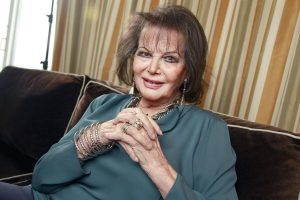
Now in her mid-eighties, Claudia Cardinale resides in France, living a quieter life while still remaining respected and admired within the film community. Her legacy continues to grow as new generations of filmmakers and audiences rediscover her work. Film scholars frequently cite her performances as examples of how subtlety, emotional intelligence, and presence can define cinematic greatness without reliance on excessive dramatization.
Her influence extends beyond her filmography. Cardinale represents a bridge between classical European cinema and modern global storytelling. She lived through a period when film transitioned from traditional studio systems to more independent and experimental forms, and she adapted without losing her identity. Her career reflects not only artistic excellence but also the evolution of cinema itself.
Ultimately, Claudia Cardinale’s story is one of resilience, dignity, and enduring artistic contribution. She navigated personal trauma, industry control, and international fame while maintaining a strong sense of self. Her refusal to be defined solely by external expectations allowed her to build a legacy grounded in authenticity. Whether remembered for her iconic roles in The Leopard, 8½, or Once Upon a Time in the West, or for her quiet strength off-screen, she remains one of the most respected figures in cinematic history.
Her journey continues to inspire not only actors and filmmakers, but anyone who values independence, integrity, and the courage to define one’s own path in life.