After several days without a public briefing, investigators in the Nancy Guthrie case returned with carefully measured updates that, while restrained in tone, carried meaningful implications. Authorities did not announce an arrest, name a suspect, or declare a decisive breakthrough. Instead, they emphasized that forensic analysis and evidence review remain active and ongoing as the search continues into its third week. The absence of dramatic developments has not signaled inactivity; rather, officials have stressed that complex investigations often advance quietly through laboratory work, interviews, and methodical cross-checking of evidence. Community members in Tucson have continued gathering outside Nancy’s home, leaving flowers and messages of support, reflecting both concern and enduring hope. Law enforcement leaders have underscored that roughly 400 personnel are now assigned to the case, demonstrating the scale and seriousness of the effort. Though public details remain limited, the newly confirmed information suggests that forensic science may ultimately provide the clearest path forward.
According to The New York Times, Chris Nanos confirmed that investigators recovered DNA evidence from inside Nancy’s residence. Importantly, officials stated that the genetic material does not match anyone known to have had regular or authorized contact with her. As part of routine investigative protocol, detectives collected elimination samples from relatives and individuals who had lawful access to the home, ensuring that expected DNA profiles could be ruled out. The fact that the recovered sample does not align with those individuals has drawn particular attention. However, authorities have not disclosed the nature of the DNA, where specifically it was found, or whether it is believed to belong to a single individual. Sheriff Nanos reiterated that the investigation remains fluid, emphasizing that evidence must be interpreted carefully and within proper forensic context. He cautioned against premature conclusions, noting that laboratory processing, verification, and comparison take time.
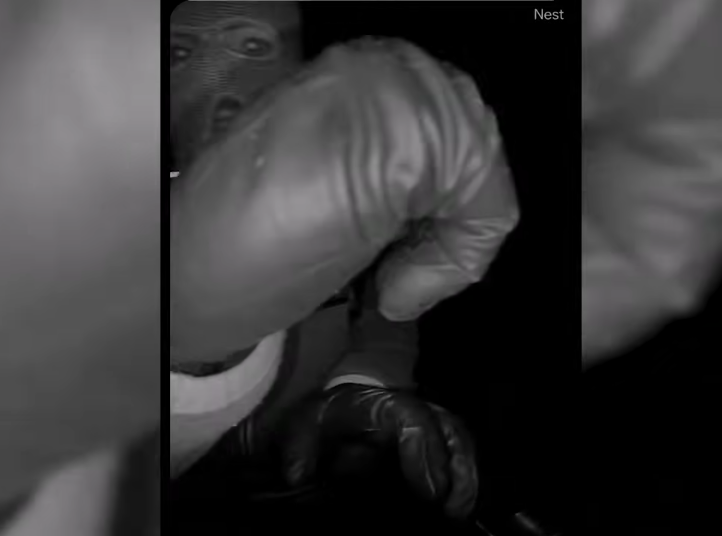
In addition to the biological evidence collected at the residence, investigators recovered a pair of gloves approximately two miles from Nancy’s property. Those gloves are now undergoing detailed forensic testing. Authorities have not confirmed whether they are directly connected to the case, and Sheriff Nanos acknowledged there is “no way” at present to determine whether they are the same gloves visible in previously released doorbell footage from February 1. That footage, which shows a masked individual at Nancy’s front door the morning she disappeared, has become one of the most scrutinized elements of the case. Forensic laboratories will examine the gloves for trace evidence, including DNA, fibers, or environmental material that might link them to the home or to a specific individual. Even if the gloves ultimately prove unrelated, investigators have indicated that every potential lead is being examined thoroughly. Sheriff Nanos stressed the department’s commitment, stating that whether resolution comes in hours, months, or years, authorities will continue working until answers are found.
Experts have noted that unmatched DNA does not represent a dead end. As reported by CNN, investigators may pursue genetic genealogy if conventional database searches fail to produce a match. This technique involves comparing an unknown DNA profile to voluntarily submitted profiles in genealogy databases, allowing analysts to identify possible relatives and construct family trees that narrow the pool of potential identities. Former FBI assistant director Frank Figliuzzi explained that such samples are typically first checked against national criminal databases, as well as against individuals known to have lawful access to the location. If those searches do not yield results, expanding into private-sector databases can sometimes uncover distant familial connections. Former FBI agent Bryanna Fox added that even partial or indirect matches can generate valuable investigative leads, guiding detectives toward individuals who might otherwise remain unidentified. Similar approaches have led to breakthroughs in other long-unsolved cases, though the process can be time-intensive and requires careful legal and ethical oversight.
Public interest has also intensified around the surveillance footage released by Federal Bureau of Investigation Director Kash Patel. The images, retrieved after what officials described as eight days of technical work with private-sector partners, appear to show an armed individual tampering with the porch camera at Nancy’s front door on the morning of her disappearance. The data was reportedly recovered from backend systems after the physical recording hardware had been removed, adding another layer of complexity to the investigation. The still images depict a person dressed in dark clothing, wearing gloves and a ski mask. At first glance, the attire appears designed to conceal identity. However, certain facial features remained partially visible. Forensic artist Lois Gibson produced a maskless sketch derived from the visible elements—primarily the eyes and portions of the lips and mustache—while acknowledging that much of the face could not be interpreted with certainty due to the covering.
One detail has drawn particular scrutiny from analysts and former investigators: the mask did not fully cover the mouth area. According to commentary cited by CNN, former police detective Mike McCutcheon suggested that leaving the mouth partially exposed could represent a significant oversight if the individual intended to avoid identification. Referencing the forensic principle that every contact leaves a trace, he explained that an uncovered mouth might allow biological material—such as saliva from speaking, coughing, or heavy breathing—to be deposited during a struggle or close interaction. Such material, if present, could account for the unidentified DNA recovered from the home. While authorities have not confirmed any direct link between the mask detail and the DNA evidence, the observation highlights how even small gaps in concealment can carry forensic consequences. Investigators, however, have refrained from speculating publicly about how or where the DNA was left, maintaining that laboratory results must guide conclusions rather than assumptions.
As images from the porch footage circulated widely online, public speculation intensified. Social media users zoomed in on screenshots of the masked individual, focusing particularly on the eyes, eyebrows, and eyelashes. Some commentators suggested that the shape of the brows appeared feminine, prompting online debates about whether the suspect could be a woman. Posts questioning the person’s gender spread rapidly across platforms, with users citing perceived eyebrow arch or eyelash curl as evidence. Despite the volume of speculation, authorities have not confirmed any information regarding the suspect’s identity, gender, or physical characteristics beyond what is visible in the footage. Investigators have repeatedly cautioned against drawing firm conclusions from limited visual data, especially when much of the face remains concealed. Experts note that lighting, camera angles, and image resolution can significantly distort perceived features. While public engagement can sometimes generate tips, officials emphasize that online conjecture should not replace verified investigative findings.
Amid the focus on forensic details and public debate, Nancy’s family has continued to appeal directly to the public for information. In a video message shared on social media, Savannah Guthrie marked two weeks since her mother’s disappearance and expressed enduring hope. Speaking calmly but emotionally, she addressed anyone who might have knowledge of Nancy’s whereabouts, urging them to come forward and emphasizing that it is never too late to do the right thing. Her message underscored both the personal toll of the investigation and the family’s belief in eventual accountability. While law enforcement continues its methodical work behind the scenes, the family’s plea has added a human dimension to a case increasingly defined by technical evidence and procedural updates.
As the search continues, investigators remain focused on laboratory analysis, digital forensics, and the careful evaluation of every recovered item. The DNA evidence, though not yet matched, represents a tangible lead that may narrow the field of possibilities. The gloves discovered nearby could yield trace material that either strengthens or eliminates a potential connection. The surveillance footage, though limited, provides a timestamped visual anchor for reconstructing the timeline of events. Officials have reiterated that complex cases often require patience, and that breakthroughs can emerge from incremental progress rather than dramatic revelations. With hundreds of personnel assigned and multiple forensic avenues still being explored, authorities maintain that the investigation is active and advancing. For now, the case remains defined by unanswered questions—but also by sustained effort, evolving forensic tools, and a commitment from investigators and family alike to pursue every possible path toward resolution.

