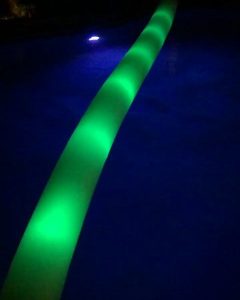
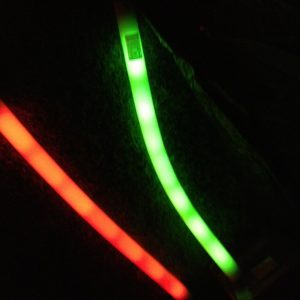
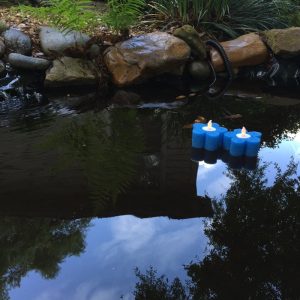
There is something universally satisfying about taking an object that feels ordinary, even forgettable, and transforming it into something unexpectedly beautiful. A pool noodle is usually associated with playful afternoons at the pool, bright colors, and carefree summer fun. It is lightweight, inexpensive, and rarely considered beyond its original purpose. Yet when creativity steps in, that same foam tube becomes a powerful design element capable of reshaping an entire outdoor environment. Combined with modern LED lighting, a pool noodle can evolve into a glowing sculptural feature that softens darkness, adds personality, and brings a sense of wonder to a backyard after sunset. This transformation speaks to a deeper human impulse: the desire to create beauty with our own hands and to find value in what we already have. In a world that often equates good design with high cost or professional expertise, projects like this quietly challenge that narrative. They remind us that imagination is the most important material of all, and that meaningful spaces are not built solely through consumption, but through intention, play, and curiosity. As outdoor areas increasingly become extensions of our living spaces, especially in times when people crave comfort and connection at home, the appeal of accessible, creative solutions has never been stronger.
Outdoor lighting plays a crucial role in shaping how a space is experienced, particularly in the evening when visual cues guide emotion and behavior. Light affects how safe we feel, how relaxed we become, and how long we choose to linger in a place. Harsh or overly bright lighting can feel clinical, flattening the atmosphere and making outdoor spaces feel exposed or uninviting. In contrast, soft, diffused lighting creates intimacy and calm, encouraging conversation and relaxation. Traditionally, achieving this kind of layered outdoor lighting meant installing permanent fixtures, running electrical wiring, and investing significant time and money. Pool noodle lighting disrupts that assumption in an elegant way. The foam material naturally diffuses LED light, smoothing out harsh points and turning them into a gentle, even glow. This diffusion mimics the effect of professional lighting techniques, but without the complexity. The result is light that feels intentional rather than improvised, subtle rather than glaring. When these glowing forms are placed thoughtfully around a yard, they change how the space is perceived, making it feel warmer, safer, and more welcoming. They do not dominate the environment, but instead enhance it, allowing the natural elements of the garden, patio, or lawn to remain central.
One of the most compelling aspects of using pool noodles as lighting elements is how accessible the idea is. Pool noodles are inexpensive, widely available, and familiar to almost everyone. LED lights, whether battery-powered, plug-in, or solar, are similarly easy to source and increasingly affordable. Together, they form a DIY solution that lowers the barrier to entry for creative outdoor design. This accessibility matters. It opens the door for renters who cannot make permanent changes, for families working within a budget, and for people who may feel intimidated by traditional DIY projects. The process itself reinforces this inclusivity. Pool noodles can be cut with basic household tools, shaped without special equipment, and adapted to different heights or configurations. LEDs generate very little heat, making them safe to use with foam and reducing concerns about damage or risk. There is no complex wiring, no need for professional installation, and no irreversible commitment. If something does not look right, it can be adjusted or removed with ease. This simplicity replaces fear with experimentation and encourages people to trust their instincts. The backyard becomes a low-stakes playground for design ideas, where mistakes are part of the fun rather than a source of stress.
Designing with pool noodle lighting becomes less about technical perfection and more about intention and atmosphere. Choices that might seem small at first quickly reveal their impact. Color, for example, dramatically shapes mood. Bright, saturated noodle colors paired with multicolored or dynamic LEDs create a playful, energetic environment that feels perfect for parties, children’s play areas, or celebratory gatherings. Softer hues, such as whites, creams, or muted pastels, combined with warm white lighting, evoke a sense of calm and elegance that suits quiet evenings or intimate dinners outdoors. Even the diameter of the noodle influences the effect, with thicker pieces producing broader, softer light and thinner ones creating delicate accents. Placement adds another layer of meaning. When lights line pathways or borders, they gently guide movement while enhancing safety. When nestled among plants, they highlight textures, leaves, and shadows that are often invisible at night. When grouped into clusters or vertical arrangements, they act as sculptural focal points that give structure to the space. Through these decisions, the yard begins to feel composed rather than accidental, unified rather than scattered. The lighting does not simply illuminate the space; it defines it.
Beyond aesthetics, pool noodle lighting has a unique ability to bring people together through the act of making. It naturally invites collaboration, especially within families or shared households. Children are drawn to the bright colors, tactile materials, and immediate visual feedback, while adults appreciate the practicality, affordability, and creative potential. Working on the project together turns the backyard into a shared canvas, where ideas are exchanged and decisions are made collectively. This collaborative process often becomes as meaningful as the finished result. Conversations unfold while testing placements, laughter emerges from unexpected outcomes, and pride grows as the space slowly comes to life. The glowing lights carry the memory of that shared effort, transforming them into more than decoration. They become symbols of time spent together, of creativity nurtured rather than outsourced. In a culture where many experiences are consumed rather than created, this kind of shared making fosters connection and a sense of ownership over the space. The backyard becomes not just somewhere to be, but somewhere that reflects the people who use it.
What makes this idea especially enduring is its adaptability. Pool noodle lighting is not a fixed installation, but a flexible system that can evolve with seasons, moods, and occasions. A relaxed summer evening might call for warm, steady light in neutral tones, while a birthday or holiday invites bold colors and playful patterns. Seasonal changes can inspire new arrangements, from autumnal hues to winter whites, without requiring entirely new materials. Because the components are reusable and modular, the environmental impact is minimal, aligning with more sustainable approaches to design. Items are repurposed, reimagined, and reused rather than discarded. Over time, the backyard becomes a living space that grows alongside the people who inhabit it, reflecting changing needs and creative impulses. In the end, transforming a simple pool noodle into a glowing backyard feature is about more than clever DIY. It is a reminder that atmosphere shapes experience, and that small, thoughtful changes can profoundly influence how we feel. Soft light slows time, invites conversation, and turns ordinary evenings into moments that linger. When that light comes from something as unexpected as a pool noodle, it carries an added sense of delight, proving that magic often begins with seeing the familiar through new eyes.