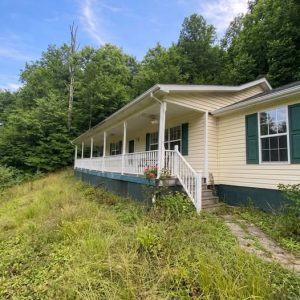
At first glance, the figures seem almost unreal. Ninety-five acres of land, a three-bedroom, two-bathroom house, and nearly 2,700 square feet of living space, all priced at just $135,000. In a real estate market dominated by skyrocketing prices, bidding wars, and urban scarcity, this listing immediately drew widespread attention. Social media users, online forums, and real estate blogs quickly circulated screenshots of the listing, accompanied by comments expressing astonishment and disbelief. Many wondered aloud how such a property could exist in the United States today, where even small city apartments frequently demand six-figure prices. For some, the reaction was tinged with suspicion: hidden liens, property condition, or remote location must surely explain the low price. Yet the property is real, and it opens a window into a side of American real estate that is rarely highlighted in national headlines—a world where geography, lifestyle trade-offs, and historical settlement patterns create opportunity, affordability, and a slower rhythm of life.
The allure of this property lies not just in its low price, but in what that price represents. Unlike urban real estate, where high demand inflates values and proximity dictates desirability, rural properties like this one reflect different priorities. Here, value is measured not by square footage alone or aesthetic polish, but by the openness of the land, the silence of the surroundings, and the freedom to live unhurried. For prospective buyers fatigued by high-cost markets, the property signals something almost mythic: the ability to acquire space, autonomy, and privacy at a fraction of what a starter condo costs elsewhere. It’s a glimpse into an American dream that feels nearly lost amid contemporary housing crises—an invitation to imagine life where space and time are abundant.
The property lies beyond Hannibal, Missouri, a small river town etched into cultural memory as the boyhood home of Mark Twain. Unlike booming metropolitan areas, Hannibal’s population growth has been steady but modest, and its housing market has remained far removed from the frenzy of big-city bidding wars. Here, land is inexpensive not because it is undesirable, but because demand never spiked to the levels seen in major urban centers. Families, retirees, and second-home buyers who appreciate slower-paced living have long been drawn to the area, valuing proximity to the Mississippi River, historical charm, and access to nature more than immediate employment hubs or luxury shopping districts.
The town and surrounding countryside provide an example of how local history, economy, and geography shape real estate patterns. Unlike sprawling urban neighborhoods where every square foot is monetized and competition drives costs to record highs, this corner of Missouri offers a different calculus. Distance from corporate offices, universities, and entertainment centers reduces demand, while the availability of large tracts of land increases opportunity. Properties like this one allow owners to enjoy expansiveness that would be inconceivable in metropolitan contexts. For someone willing to trade convenience and immediate access to city amenities, the area represents a rare chance to embrace rural abundance and autonomy.
Accessing the property itself underscores the value of openness. A long gravel drive winds through fields and pastures, giving the sense of moving into a private enclave untouched by daily urban intrusion. There are no neighbors pressing close, no constant hum of traffic, no artificial glow from streetlights obscuring the stars. This approach alone signals a lifestyle radically different from what most modern homeowners encounter. The house sits anchored amid the land, neither ostentatious nor architecturally striking, yet conveying a sense of permanence and practicality.
Such features are often absent in city-centric listings, where visual appeal and “staging” may overshadow livability or long-term comfort. Here, the house is functional, designed for daily living and resilience, not for quick resale or social media admiration. For buyers seeking tranquility, privacy, or the ability to craft their environment without intrusion, the setting itself becomes as valuable as the home. The slow approach along the gravel drive, the soft rustle of leaves, and the unbroken horizon create an intangible sense of wealth: not of material excess, but of freedom and serenity. In a world increasingly crowded with apartment complexes and condos, the arrival experience communicates a kind of luxury rarely quantified by dollars.
While the house provides comfort, it is the land that defines the property. Ninety-five acres comprise fields, pastures, and wooded areas, punctuated by a quiet pond that reflects the changing sky. Outbuildings dot the property, offering storage, workspace, or potential for expansion. Unlike properties constrained by lot lines or neighboring developments, this acreage allows owners to experience land as both utility and sanctuary. In a modern housing market, where scarcity often dictates value, the very abundance of space feels radical.
Land ownership at this scale offers practical advantages as well as emotional ones. Whether used for gardening, livestock, recreation, or conservation, the property transforms the concept of homeownership into a living relationship with the environment. The freedom to walk through fields, hike wooded areas, or fish in the pond adds dimensions of health, relaxation, and connection rarely afforded in urban settings. Such expansiveness also signals long-term stability: the land is unlikely to be encroached upon, and its value is tied to enduring features—soil, trees, water—rather than market hype. In this way, land itself becomes a form of wealth that transcends the transient trends of urban housing prices.
Inside, the house continues the theme of space and livability. Nearly 2,700 square feet accommodate three bedrooms, two bathrooms, and generous common areas. Natural light streams through windows, emphasizing openness and calm. Unlike homes designed solely for visual impact in listings, this property offers functionality: spaces are proportioned for practical use, allowing family life, hobbies, or quiet reflection to unfold comfortably.
The interior mirrors the philosophy of the property as a whole: room to breathe, room to grow, and room to live at a pace dictated by the resident rather than by market pressures. For some, the house’s unpretentious style may even be an attraction, offering a canvas for personalization rather than a pre-furnished, cookie-cutter interior. Buyers have the freedom to adjust, renovate, or expand without concern for homeowner association rules or urban restrictions. In this sense, the house embodies a rare opportunity for stability and self-directed living, combining the physical comfort of a traditional home with the psychological comfort of autonomy and space.
Ultimately, the property’s $135,000 price tag is less a reflection of compromise than of perspective. It offers a different interpretation of value—one rooted in geography, lifestyle, and the prioritization of time, freedom, and space over urban convenience or luxury finishes. For prospective buyers, it represents a chance to reclaim aspects of life increasingly scarce in crowded metropolitan areas: privacy, silence, open skies, and land that can be experienced rather than merely admired.
The property also serves as a reminder of the diversity of the American real estate landscape. While headlines often focus on unaffordable cities, bidding wars, and shrinking apartments, rural regions quietly offer alternatives for those willing to embrace a slower pace. Here, ownership is not simply a financial transaction; it is a lifestyle choice, an alignment of personal values with physical space. For those who prioritize autonomy, tranquility, and the ability to shape their environment, this property is more than a house—it is an invitation to experience freedom, to cultivate life on one’s own terms, and to find richness not measured by market prices but by personal fulfillment. In a world increasingly defined by congestion and competition, ninety-five acres for $135,000 feels less like a bargain and more like a glimpse of a long-forgotten American promise: that space, opportunity, and the quiet satisfaction of land can still be found by those willing to embrace it.