Melania Trump once again demonstrated her ability to command attention with a single appearance during Mar-a-Lago’s New Year’s Eve 2025 celebration, an event traditionally packed with spectacle, celebrity-style pageantry, and political networking. While the annual gathering is usually defined by fireworks, high-profile guests, and carefully staged moments, this year the spotlight narrowed quickly to one unmistakable focal point: the former First Lady’s shimmering silver gown. From the moment Melania and President Donald Trump arrived at the Palm Beach estate on December 31, cameras followed their every step. Within minutes, images of her look began circulating online, transforming what was meant to be a celebratory evening into a full-scale fashion debate. In an era where visual moments travel faster than policy statements or speeches, Melania’s wardrobe choice once again proved how powerfully a single image can dominate public conversation.
The dress itself was unapologetically bold. Melania wore a sleeveless, metallic, sequin-covered gown with a sleek, sculpted silhouette that reflected light dramatically under Mar-a-Lago’s chandeliers. Fashion publications quickly identified the piece as the Manu Sequin maxi dress by The New Arrivals by Ilkyaz Ozel, a designer label known for striking eveningwear that favors clean lines and high-impact finishes. The gown leaned fully into classic New Year’s Eve glamour, prioritizing shine, confidence, and visual drama. Rather than layering the look with elaborate accessories, Melania opted for restraint elsewhere. Minimal jewelry, polished makeup, and her signature loose waves ensured the dress remained the undeniable centerpiece. The overall effect was deliberate: controlled, striking, and impossible to ignore, especially in a room designed to amplify spectacle.
Social media reaction followed almost instantly, and it was sharply divided. Critics wasted no time questioning both the dress’s ultra-reflective finish and its form-fitting design. Some mocked the material, comparing it to tin foil or aluminum wrap, while others framed their criticism in terms of appropriateness. For these voices, the issue wasn’t simply fashion taste, but what they believed a First Lady—or former First Lady—should project at a politically charged public event. Comments suggested the look felt more suitable for a nightclub than a gathering associated with political influence and global figures. The tone of criticism reflected a familiar debate that has followed Melania Trump throughout her public life: where personal style ends and symbolic responsibility begins, and who gets to define those boundaries.
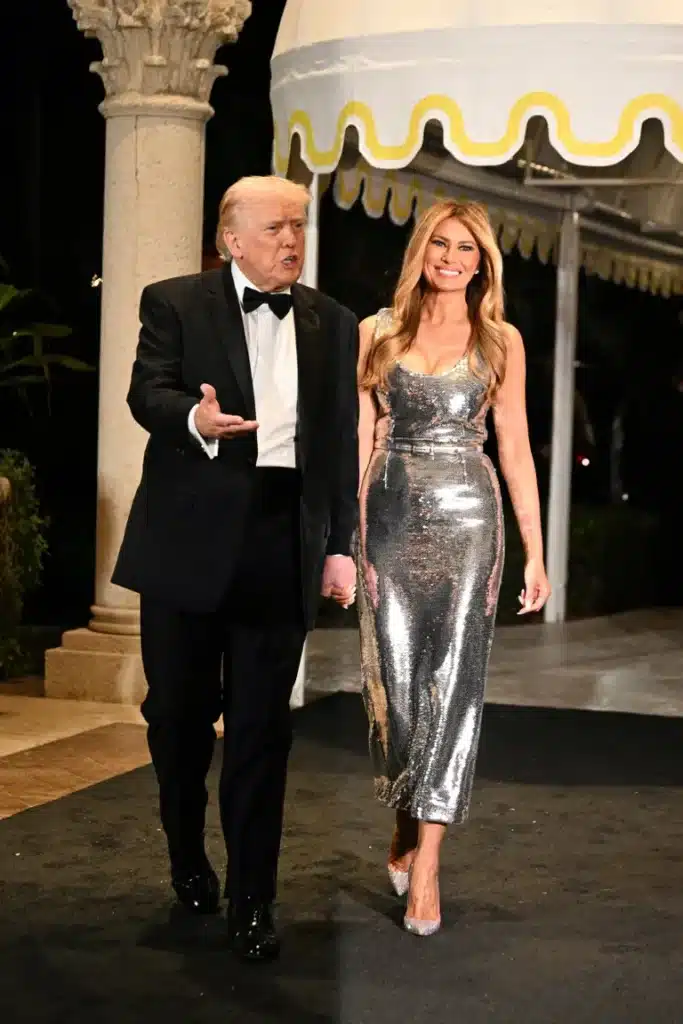
At the same time, a strong current of support pushed back against the criticism. Many defenders argued that New Year’s Eve is precisely the moment for bold, celebratory fashion, and that Melania’s gown matched the spirit of the occasion perfectly. Supporters praised her confidence, elegance, and consistency, noting that she has long favored dramatic, high-fashion statements rather than conventional expectations. Alongside this praise, a separate thread of speculation emerged that had little to do with the dress itself. Some commenters claimed Melania looked subtly different, pointing to her smile or expression without offering concrete explanations. This kind of speculation, familiar to anyone who has followed public figures online, added another layer to the conversation, shifting focus from fashion to appearance in ways that underscored how intensely scrutinized her public image remains.
Inside Mar-a-Lago, the evening continued with all the hallmarks of the club’s exclusive New Year’s tradition. Guests moved through the ballroom amid glittering décor, with the guest list reportedly including major political and international figures such as Rudy Giuliani and Israeli Prime Minister Benjamin Netanyahu and his wife. As midnight approached, President Trump shared a brief New Year’s message—“Peace on earth”—offering a simple note amid the extravagance. Yet even as politics and diplomacy unfolded within the room, the online narrative remained largely fixed on Melania’s appearance, illustrating how visual symbolism often eclipses substance in the digital age.
The night’s final act added another layer of spectacle. According to pool reports, an artist created a large live painting of Jesus during the event, performing in front of guests before the artwork was auctioned. The painting ultimately sold for a staggering $2.75 million, a figure later reported by arts and religion-focused outlets. The moment encapsulated the unique blend of wealth, performance, politics, and symbolism that defines Mar-a-Lago gatherings. Still, despite the eye-popping auction result and the high-powered guest list, it was Melania Trump’s silver sequin gown that became the enduring image of the night. Love it or hate it, the dress succeeded in doing what few things can: cutting through the noise and dominating the conversation. By the time the fireworks faded and 2026 began, one truth was clear—sometimes, a single look can outshine everything else on the stage.

