Aging is an inevitable process that touches every person, regardless of fame, fortune, or physical vitality. Time moves forward without exception, gradually reshaping faces, bodies, and perspectives. For most people, these changes unfold privately, noticed only by family, friends, or oneself in the mirror. For celebrities, however, aging happens under constant observation. Old films, television reruns, magazine covers, and viral images create a continuous visual record that invites comparison between past and present. This contrast can be jarring, especially when audiences encounter familiar faces decades after first seeing them. The shock is often less about aging itself and more about the illusion of permanence we project onto public figures, freezing them in time at the moment they first captured our attention.
Hollywood has long struggled with its relationship to aging, particularly when it comes to women. While male actors are often allowed to mature into roles associated with wisdom, authority, or rugged charm, women face narrower expectations tied closely to youth and appearance. As a result, female celebrities frequently endure intense scrutiny as they grow older. Every new photograph becomes a point of discussion, and natural changes are sometimes treated as failures rather than as reflections of a life lived. This environment creates pressure to maintain a youthful image at all costs, encouraging cosmetic interventions that promise to hold time at bay. Against this backdrop, choosing to age naturally can feel like a quiet act of defiance, challenging long-standing industry norms.
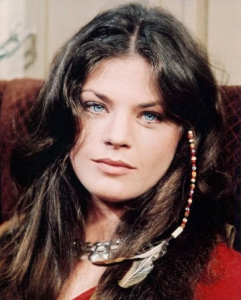
Meg Foster emerged during the 1970s and 1980s as one of Hollywood’s most visually distinctive performers. With her piercing blue eyes and commanding screen presence, she stood out in an era filled with memorable faces. Her film debut in Adam at 6 A.M. (1970), opposite Michael Douglas, marked the beginning of a career that would span decades and multiple genres. Foster brought intensity and intelligence to her roles, often portraying complex characters that lingered in viewers’ minds. Her appearance was striking, but it was her ability to convey depth and mystery that made her performances compelling. She quickly became a familiar presence in both film and television during a prolific period of her career.
Throughout the height of her fame, Foster appeared in a wide range of popular television series, including Bonanza, The Six Million Dollar Man, The Twilight Zone, and Murder, She Wrote. Each role added to her reputation as a versatile and reliable actress capable of inhabiting very different worlds. Her unique look became so closely associated with her identity that Mademoiselle magazine famously dubbed her “the eyes of 1979,” a label that captured how central her gaze was to her appeal. Yet this emphasis on a single physical trait also exemplified how the industry often reduces actresses to specific features, subtly reinforcing the idea that their value lies primarily in appearance rather than craft.
Now in her mid-seventies, Meg Foster’s appearance has naturally changed, as all faces do with time. Recent photographs have sparked online conversations, some thoughtful and appreciative, others less kind. While criticism can be harsh, many observers have expressed admiration for her decision to avoid extensive cosmetic procedures and to allow her face to reflect her years. In a culture that often equates aging with decline, her choice highlights the discomfort society still has with visible signs of time. The reactions reveal more about collective attitudes toward aging than about Foster herself, exposing how deeply ingrained expectations of eternal youth remain, especially for women who once embodied a particular ideal of beauty.
Rather than chasing a version of herself preserved in the past, Foster appears to have embraced the present with quiet confidence. She continues to act occasionally, selecting roles without the pressure to conform to industry standards of youthfulness. Beyond acting, she devotes much of her time to horse breeding, a pursuit that reflects a life grounded in personal passion rather than public validation. In an era dominated by filters, cosmetic enhancements, and carefully curated images, her natural approach to aging offers a refreshing counterpoint. Meg Foster’s journey suggests that true grace lies not in resisting time, but in accepting it, demonstrating that authenticity and fulfillment can deepen, rather than diminish, with age.