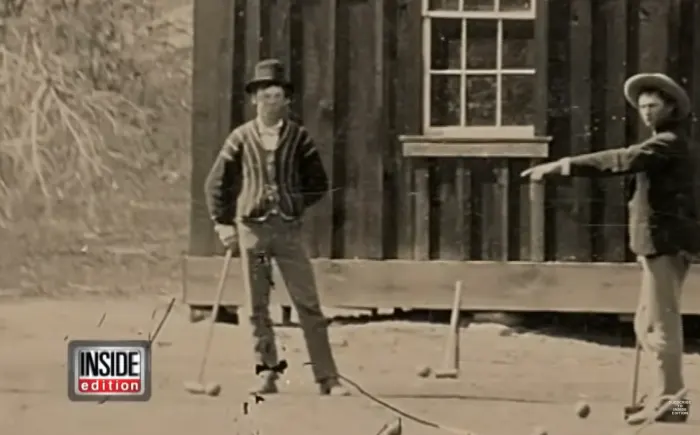
In a remarkable twist of fate, a collector in Fresno, California, turned a casual visit to a flea market into a historic discovery that has left historians and Western enthusiasts buzzing. What began as a simple, almost whimsical purchase—a small photograph bought for a mere two dollars—has been elevated to one of the most significant finds in the world of American Western memorabilia. The photograph in question is not just any antique snapshot; it features none other than the notorious outlaw Billy the Kid, casually engaged in a game of croquet, an activity far removed from the violent legend that has cemented his place in American folklore. The incongruity of the scene—a feared gunslinger partaking in a genteel pastime—only adds to the mystique and intrigue surrounding the image. The photograph, measuring a modest 4 inches by 5 inches, has now been valued at an astonishing estimated $5 million, illustrating the rare and historic nature of such a find. The story of how a seemingly worthless photograph transformed into an invaluable artifact is as compelling as the life of the outlaw it immortalizes, captivating both collectors and historians alike.
The authentication of the photograph was spearheaded by Kagin’s Inc., a renowned firm specializing in numismatics and rare historical artifacts. Earlier this month, the company officially verified the authenticity of the tintype, confirming its significance and cementing its place in history. According to David McCarthy, Kagin’s senior numismatist, the process of authenticating the image was meticulous and exhaustive, spanning over a year of careful scrutiny. McCarthy emphasized that a mere resemblance to Billy the Kid would not suffice; instead, every element of the photograph had to be painstakingly examined. “When we first saw the photograph, we were understandably skeptical—an original Billy the Kid photo is the Holy Grail of Western Americana,” McCarthy revealed. The team conducted a comprehensive analysis that included examining the clothing styles, the backdrop of the photograph, and even the specific details of the tintype itself. Their investigation also extended to historical records and contemporary accounts of Billy the Kid and his associates, ensuring that every piece of evidence aligned with the period and circumstances depicted.
The photograph, thought to have been taken during the summer of 1878, potentially at a wedding, shows Billy the Kid alongside members of his infamous gang, The Regulators. This small, unassuming image provides a rare glimpse into the daily life of one of the Wild West’s most enigmatic figures, capturing a moment of leisure rather than the violent exploits that history often emphasizes. The photo portrays Billy in front of a modest house, engaging in a seemingly benign activity, offering historians and collectors a unique perspective on his personality and social interactions. Prior to this discovery, only one other authenticated photograph of Billy the Kid was known to exist—a 2-inch-by-3-inch tintype taken in 1880 in Fort Sumner, New Mexico, which fetched an impressive $2.3 million in 2010. This new discovery, therefore, does more than merely complement the historical record; it significantly enhances our understanding of the man behind the legend, providing a tangible connection to the past that has long been shrouded in myth.
Billy the Kid, born Henry McCarty and also known by the alias William H. Bonney, has occupied a legendary status in American history as both a thief and a gunfighter. His notoriety was fueled by his daring escapades, most famously his escape from prison after killing two guards, an act that further enshrined him as a symbol of rebelliousness and audacity in the public imagination. While folklore attributes 21 killings to Billy the Kid—one for each year of his life—historical records suggest a more modest number of nine confirmed deaths, four of which he was solely responsible for, including the two guards, while assisting in five others. This nuanced understanding of his life illustrates the complex interplay between myth and reality in shaping his legacy. The discovery of this photograph not only reinforces his historical significance but also humanizes him, depicting a figure who was capable of ordinary, even whimsical, activities despite the violence and danger that surrounded much of his existence.
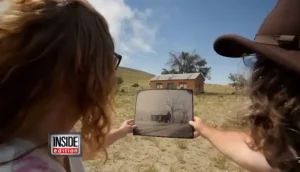
The path to authenticating the photograph was neither straightforward nor simple. Experts assembled by Kagin’s had to meticulously evaluate every detail to confirm that the image was genuine. This process involved cross-referencing historical records, examining the physical characteristics of the tintype, and conducting site inspections to match the backdrop of the photograph with the actual location. Randy Guijarro, the collector who purchased the image, collaborated closely with reporters and experts during this process, even holding up the photograph in front of the building where it was originally taken, a symbolic act that connected past and present in a tangible way. The verification of this photograph represents a triumph for historical research and collector diligence, highlighting the patience and expertise required to authenticate a piece of Americana that carries such immense historical weight. It also underscores the serendipitous nature of historical discovery, where what appears to be an ordinary find can, upon closer inspection, turn into a treasure of incalculable value.
Ultimately, the emergence of this photograph as a verified image of Billy the Kid adds a remarkable and invaluable chapter to the story of the Wild West’s most iconic outlaw. From a humble purchase at a flea market to a multimillion-dollar historical artifact, the photograph exemplifies how ordinary objects can transform into extraordinary links to the past. It offers scholars, collectors, and enthusiasts a rare glimpse into the life of a figure whose legend has long been magnified and mythologized in American culture. Beyond its monetary worth, the image enriches the historical narrative of the 19th-century American frontier, providing a vivid and personal connection to a bygone era. This small photograph, once overlooked and undervalued, now stands as a testament to the enduring fascination with Billy the Kid and the powerful allure of history waiting to be rediscovered in the most unexpected of places.