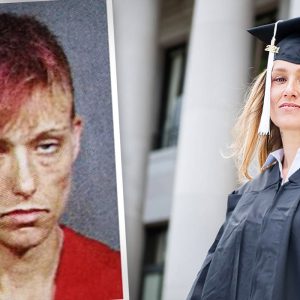
Ginny Burton’s life is a staggering journey from addiction, trauma, and criminality to redemption and academic achievement. Born in Tacoma, Washington, in 1972, she grew up in a deeply dysfunctional home, surrounded by neglect, abuse, and substance dependence. Her mother, herself struggling with addiction, introduced Ginny to drugs at just six years old, setting her on a path that would consume her youth. By her early teens, Ginny was using methamphetamine and crack cocaine, substances that became both a refuge and a prison. By sixteen, she had become a heroin addict and had survived sexual assault, leaving scars that would take decades to confront. Her adolescence was marked by violence, crime, and overwhelming despair, a landscape in which hope seemed almost inconceivable. She spent much of her teenage years on the streets, cycling in and out of foster care and juvenile detention, each experience deepening her sense of isolation and hopelessness.
During her twenties and thirties, Ginny’s life spiraled further out of control. She accumulated seventeen felony convictions, each a record of her struggles with addiction and survival. She lost custody of her children, a blow that compounded her pain and self-loathing. To feed her drug habits, she committed increasingly violent crimes, living a life defined by fear, chaos, and self-destruction. Time in prison became a strange form of sanctuary; while incarcerated, she could get clean and reflect on the life she had lived, but release always thrust her back into the environments and relationships that had fostered her addiction. The cycle seemed unbreakable, as if the world itself were conspiring to keep her trapped in despair. Yet, even in her darkest moments, a flicker of resilience remained, quietly waiting for a chance to emerge.
That chance came in 2012, following what could have been just another arrest. Ginny was caught after a police chase, a scenario that might have terrified someone else. Instead, she experienced an unexpected sense of peace. Sitting in the back of that patrol car, she felt clarity: she could no longer live the life that had defined her for forty years. For the first time, she made a conscious decision to change, to reclaim control over her life. It was a moment of radical honesty and self-determination, the kind of moment that can transform an entire lifetime. Ginny entered Drug Court, a turning point that marked the beginning of her recovery. She completed an intensive treatment program and managed, for the first time, to stay clean. She began working in social services, assisting individuals transitioning out of prison, a role that allowed her to translate her personal struggles into empathy and action.
Recognizing the power of education, Ginny returned to school, starting at South Seattle College. Initially, she felt out of place among younger students who had lived vastly different lives, but she persevered. Her intelligence, discipline, and determination became apparent as she excelled academically, eventually transferring to the University of Washington. There, she distinguished herself not just as a capable student but as a scholar with a mission. Her accomplishments culminated in being named a Truman Scholar, one of the most prestigious honors for students pursuing careers in public service. At age 48, Ginny graduated with honors in political science, a testament to the resilience and discipline she had cultivated through years of struggle. Her story caught national attention, particularly through her “before and after” photos, which illustrated the magnitude of her transformation.
Today, Ginny lives in Rochester, Washington, with her husband Chris, who is also in recovery. Their shared experiences have forged a deep understanding and mutual support that strengthens their relationship. Ginny is focused on pursuing a master’s degree while simultaneously advocating for reform in the addiction and prison systems. She emphasizes the need for practical, effective solutions that go beyond sympathy and address the root causes of addiction and criminal behavior. For Ginny, true love and support mean holding people accountable while equipping them with the tools and resources to reclaim their lives. Her work aims to ensure that those caught in cycles of addiction and incarceration can access the help they need to build sustainable, meaningful lives.
Ginny Burton’s life is a story of extraordinary resilience, challenging societal perceptions of criminals and addicts. From the depths of addiction and criminality, she emerged with a sense of purpose and commitment to serving others. Her journey underscores the possibility of redemption and the transformative power of education, discipline, and self-honesty. She demonstrates that even lives marked by mistakes, violence, and despair can be reclaimed, reshaped, and directed toward meaningful contribution. Her advocacy emphasizes that recovery and reform require both personal responsibility and systemic support, highlighting the interconnected nature of individual transformation and societal change. From the streets of Tacoma to the halls of academia, from a life defined by addiction to one marked by achievement and service, Ginny’s story proves that hope, truth, and discipline can lead to extraordinary transformation and that no one is beyond saving.