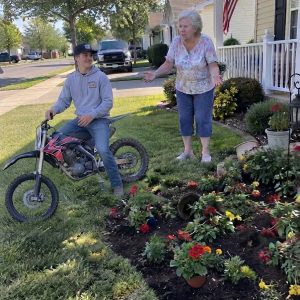
I called Patricia Delgado, the attorney I had quietly retained months earlier. I had photographs of my intact garden, photographs of the damage, dates of Kyle’s motorcycle incidents, and records of him blocking driveways, crossing neighbors’ lawns, and disturbing the street. Patricia told me the garden damage itself was small, but the pattern mattered. She helped me file a formal complaint and contacted the city council office. She also told me a community reporter was interested in the larger problem of neighborhood behavior and accountability.
A legal notice was placed beside my front walk. Kyle stopped and read it. His father, Dennis, came to my door soon afterward, offering to pay for the flowers. I told him the flowers were the smallest part of what needed to be repaired. The council would review the complaints, the traffic division would examine Kyle’s riding violations, and the reporter would document the broader pattern. Dennis finally admitted he had known about his son’s behavior and had kept telling himself Kyle would eventually grow out of it. He apologized. I accepted the apology, but told him I wanted something different from his son: not an apology arranged by his father, but one he reached himself.
Two weeks later, Kyle came to my house. He had read the newspaper article about the neighborhood and, more importantly, about my husband and the garden. Sitting at my kitchen table, he apologized without blaming his father. He admitted he had looked at flowers and seen something replaceable because he had never learned to recognize what mattered to other people. He said he had been treating more than gardens that way. He offered to repair the lawn and asked whether he could help me plant new flowers in the spring. I told him he could. Then he asked what Roy had been like.
I told him about the man who had spent an entire Saturday creating something beautiful because he knew exactly what mattered to me. Kyle listened. Before leaving, he said he wanted to become someone who understood what mattered to people. That winter, the garden looked empty, but I knew it wasn’t finished. In spring, Kyle would return wearing borrowed gloves, ready to plant red and yellow flowers beside me. He would not fully understand what those flowers meant yet. He was only twenty-two. But understanding comes slowly. You plant something, care for it, and watch it grow until, years later, you finally understand its shape. Roy had known that. And so did the garden.




This Post Has One Comment