Transforming your backyard into a space that feels both personal and visually striking doesn’t always require expensive materials or professional landscaping. Sometimes, the most memorable designs come from simple ideas approached creatively. One such idea—embedding plastic kitchen spatulas into concrete to create faux-stone garden edging—might sound unusual at first, but it offers a surprisingly effective and artistic solution for defining outdoor spaces.
At its core, this project is about rethinking everyday objects. Plastic spatulas are inexpensive, widely available, and durable enough to withstand outdoor conditions when properly embedded. When arranged in wet concrete, they form a repeating scalloped pattern that mimics decorative stone edging. The result is a border that feels structured yet playful, adding texture and character to gardens, pathways, or patios.
The process begins with preparation. Before mixing any materials, it’s important to plan the layout of your edging. Decide where the border will run—around a flower bed, along a walkway, or framing a seating area. Measuring the length helps determine how much concrete and how many spatulas you’ll need. Once the layout is clear, prepare the ground by clearing debris and leveling the surface. This ensures the edging will sit evenly and remain stable over time.
Next, set up your workspace by laying down a tarp or plastic sheeting. This protects the surrounding area and makes cleanup easier. In a large container, mix the concrete according to the manufacturer’s instructions. The consistency should be thick but workable—not too dry, and not overly runny. Achieving the right texture is important because it allows the spatulas to stay in place without sinking or shifting.
Once the concrete is ready, pour it along the planned border area. Use a trowel to spread it evenly, aiming for a width of about 6 inches and a depth of around 3 inches. This creates a solid base that can support the decorative elements while maintaining durability. Smooth the surface as much as possible, but don’t worry about perfection at this stage—the texture will be partially covered by the spatulas.
While the concrete is still wet, begin placing the spatulas. Press each one into the mixture with the handle facing upward and the head partially exposed. Spacing them about an inch apart creates a consistent scalloped pattern. This step is where the design comes to life, so take your time aligning each piece. A leveling tool can help ensure that all spatulas sit at the same height and angle, giving the finished border a cohesive appearance.
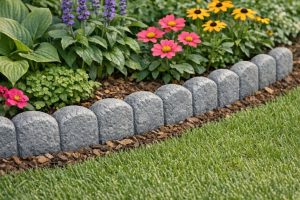
As you continue placing the spatulas, you may notice how the pattern begins to define the space. What started as a simple strip of concrete gradually transforms into something more decorative and intentional. This visual progression is part of what makes the project satisfying—it’s a clear example of how small, repetitive elements can create a larger design impact.
After all the spatulas are in place, allow the concrete to cure fully. This typically takes at least 24 hours, though it’s best to follow the specific instructions provided with your concrete mix. During this time, avoid disturbing the area to ensure the edging sets properly. Once cured, you can clean off any excess concrete from the spatula handles and tidy up the surrounding space.
The finished result is a border that combines functionality with creativity. The concrete provides strength and stability, while the spatulas add a unique visual element. The neutral gray tone of the concrete works well with a variety of garden styles, complementing both vibrant flowers and more subdued greenery.
One of the advantages of this method is its flexibility. You can customize the look in several ways to suit your preferences. For example, painting the exposed spatula heads with outdoor acrylic paint can introduce color and contrast. Bright hues can make the border more playful, while muted tones can create a more subtle effect. Alternatively, using spatulas of different sizes or arranging them at slightly varied angles can produce a more dynamic, less uniform pattern.
Durability is another important consideration. While the spatulas themselves are made of plastic, embedding them securely in concrete helps protect them from movement and wear. Applying a concrete sealer after the edging has cured can further enhance its مقاومت to weather, moisture, and staining. This step is especially useful in climates with frequent rain or temperature fluctuations.
Beyond its practical benefits, this project also highlights a broader idea: creativity often comes from seeing ordinary objects in new ways. A spatula, typically confined to the kitchen, becomes part of a garden design. Concrete, usually associated with construction, becomes a medium for artistic expression. Together, they form something that is both functional and visually engaging.
This approach can also inspire further experimentation. Once you see how well this technique works, you might consider incorporating other shapes or materials into similar projects. The principle remains the same—combining simple elements to create something distinctive.
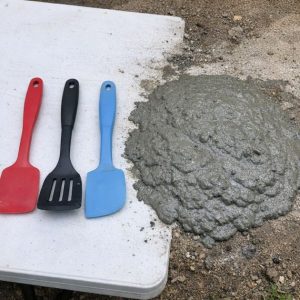
In terms of placement, these faux-stone borders can be used in many areas of your yard. Around flower beds, they provide a clear boundary that helps keep soil and mulch contained. Along pathways, they guide movement and add definition. Around patios, they create a subtle transition between different surfaces. Because the design is relatively neutral, it can adapt to various landscaping styles, from traditional gardens to more modern layouts.
Maintenance is minimal. Occasional cleaning to remove dirt or debris will keep the edging looking fresh. If you’ve painted the spatulas, you may need to touch up the color over time, depending on exposure to sun and weather. Otherwise, the structure should remain stable and functional for years.
For those who enjoy DIY projects, this method offers a satisfying balance of simplicity and creativity. It doesn’t require specialized tools or advanced skills, yet it produces a result that feels unique and intentional. It’s also a project that can be completed in stages, making it manageable even for those with limited time.
In the end, the appeal of this faux-stone edging lies not just in its appearance, but in the process itself. It encourages you to engage with your outdoor space, to experiment, and to create something that reflects your personal style. It shows that meaningful design doesn’t always come from expensive materials—it can emerge from imagination and a willingness to try something different.
By transforming a basic concept into a decorative feature, you add more than just structure to your garden—you add character. And that’s what makes this project stand out: it turns the ordinary into something memorable, one spatula at a time.