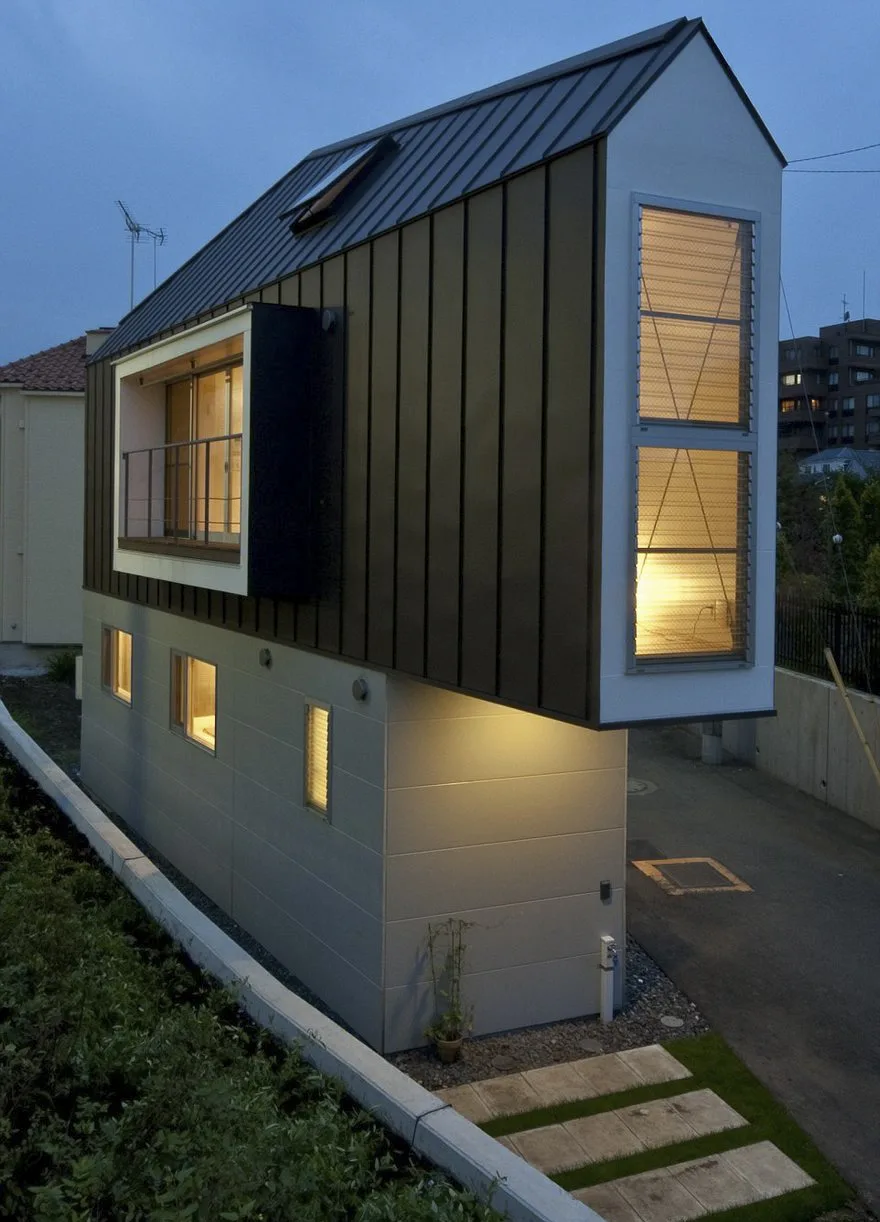
“Don’t judge a book by its cover” proves especially true in Japan, where innovative architecture often transforms the smallest plots into remarkable living spaces. One striking example is the Mizuishi Architects Atelier House, a compact yet imaginative home designed by Mizuishi Architects Atelier. At just 594 square feet, the house sits on an unusually shaped triangular plot wedged between a river and a road. From the outside, it appears almost impossibly small—like a sliver of space squeezed into the city. Yet the moment you step inside, the perception shifts entirely, revealing a home that feels open, functional, and thoughtfully designed.
The unusual shape of the land presented a significant challenge, but also an opportunity for creativity. Rather than forcing a conventional layout onto the plot, the architects embraced its triangular form, allowing it to dictate the structure of the house. This decision resulted in a design that feels organic and efficient, where no space is wasted. The exterior’s sharp angles and narrow footprint might suggest limitation, but in reality, they are the foundation of the home’s uniqueness. By working with the constraints instead of against them, the architects created a residence that stands out not only for its size, but for its ingenuity.
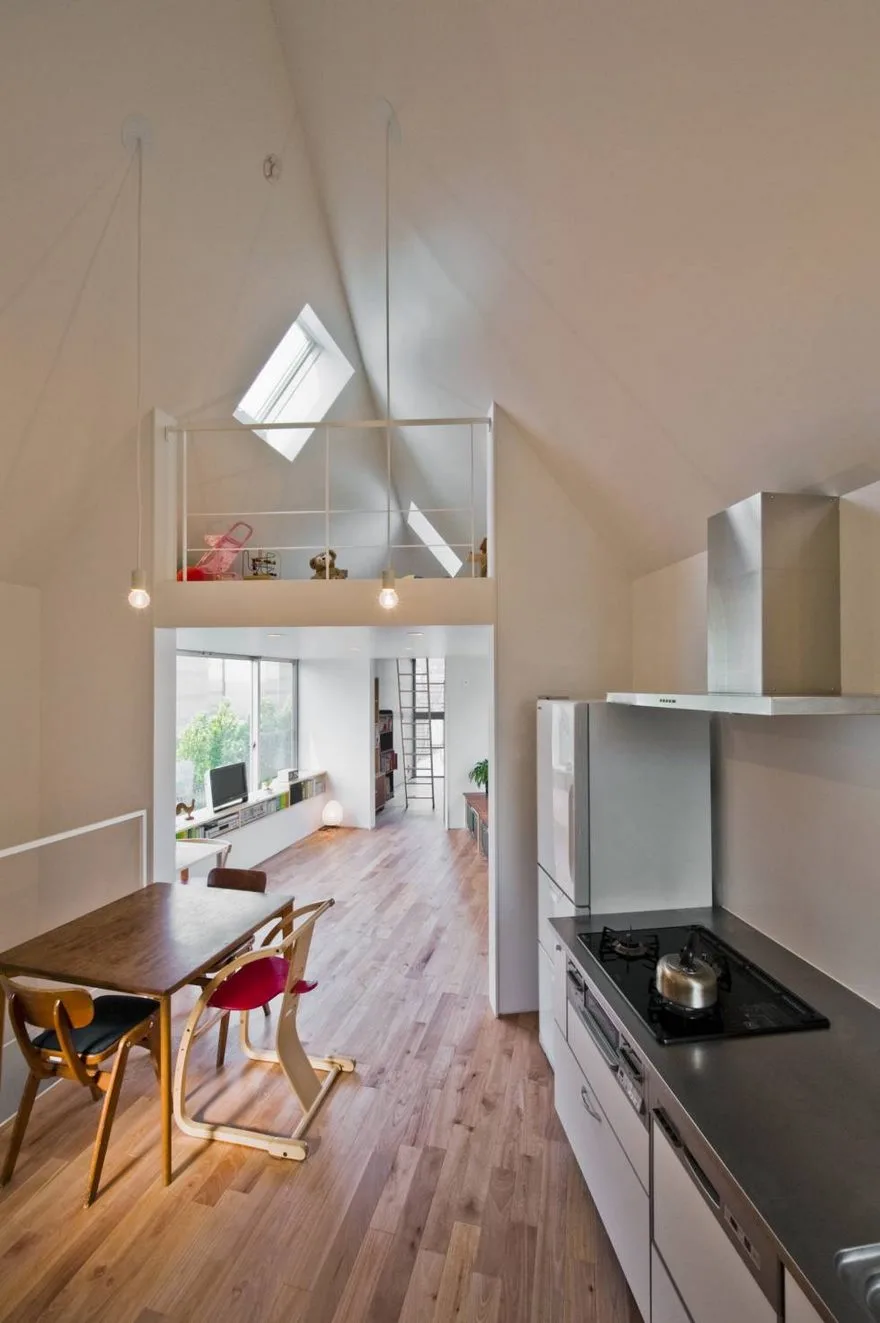
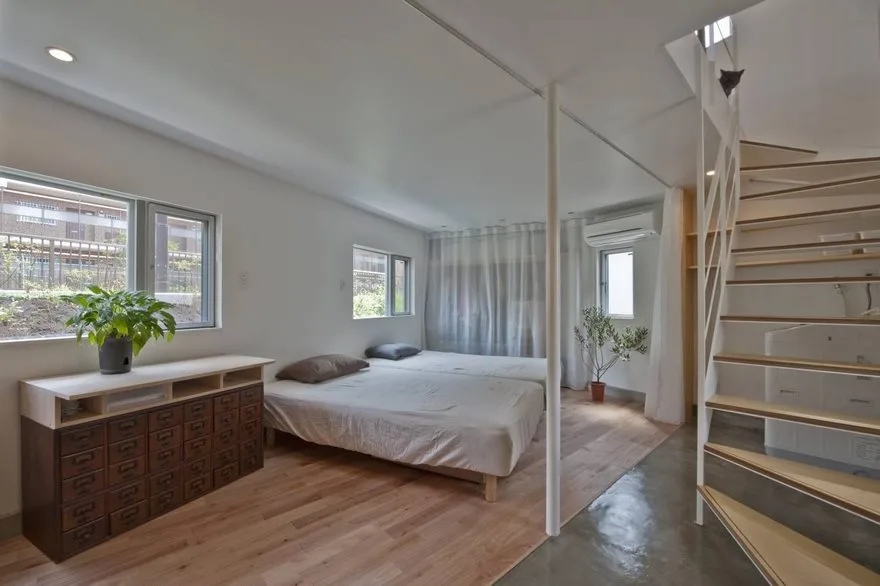
Inside, the home is spread across two carefully planned floors, each serving a distinct purpose. The first floor is dedicated primarily to rest, housing a მშვიდ and comfortable bedroom that maximizes privacy despite the home’s compact nature. Moving upstairs, the second floor opens into a bright and airy living space that combines the kitchen and lounge area. This upper level benefits from large windows that invite natural light, making the room feel far more expansive than its actual dimensions. The openness of the layout allows for fluid movement, creating a sense of freedom that contrasts sharply with the home’s modest footprint.
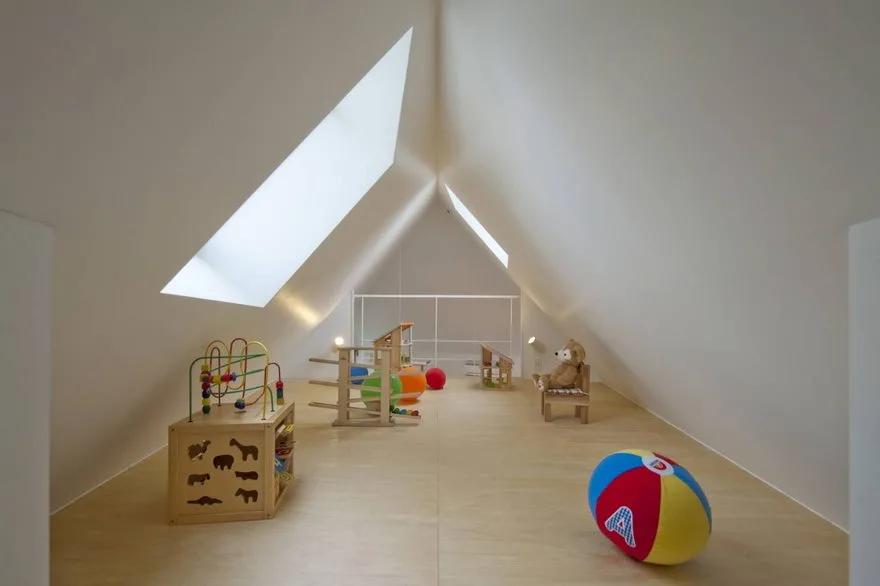
One of the most charming features of the house is its mezzanine level, a small yet inviting space tucked above the main living area. Accessible by a simple ladder, this cozy nook functions as a family playroom or relaxation area. While it may not offer full standing height, it adds an extra layer of functionality and personality to the home. Spaces like this demonstrate how vertical design can compensate for limited floor area, turning overlooked zones into meaningful parts of everyday life. It’s a reminder that in compact homes, every inch matters—and every inch can be transformed into something useful and enjoyable.
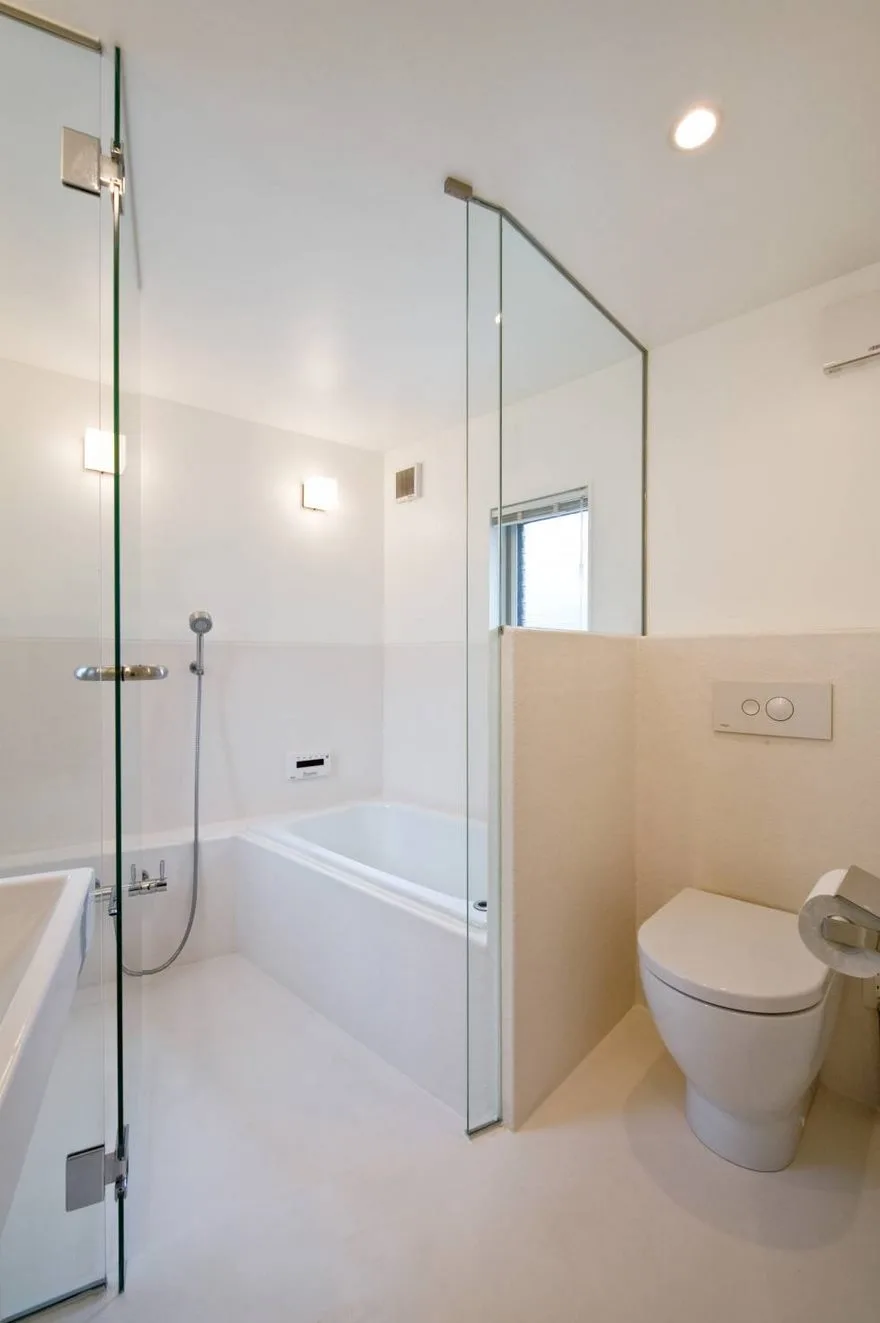
The interior design plays a crucial role in shaping the home’s atmosphere. White walls dominate the space, reflecting light and enhancing the feeling of openness. This minimalist approach is a hallmark of many modern Japanese homes, where simplicity and clarity are prioritized. The absence of visual clutter allows the architecture itself to take center stage, emphasizing clean lines and thoughtful proportions. Natural light flows freely throughout the house, shifting with the time of day and adding warmth to the otherwise restrained palette. The result is an environment that feels calm, balanced, and surprisingly spacious.
Ultimately, this small house is more than just a clever architectural solution—it is a testament to the power of thoughtful design. It challenges conventional ideas about what a home should look like and how much space is truly necessary for comfortable living. In dense urban environments where land is scarce, projects like this offer valuable lessons in efficiency, creativity, and adaptability. The Mizuishi Architects Atelier House stands as a quiet yet powerful example that even the smallest spaces can hold immense potential, proving that size alone does not define the quality of a home.