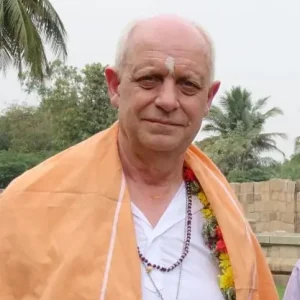
The headline-grabbing claim that a so-called “New Nostradamus” has made a chilling prediction about Donald Trump has sparked widespread curiosity and debate online. The figure behind this prediction is Craig Hamilton-Parker, a British psychic who has built a reputation for forecasting major global events. While some followers believe his past predictions lend credibility to his latest warning, others remain highly skeptical. His newest claim suggests that global instability—particularly conflict involving Iran or other regions—could create conditions so extreme that normal political rules might no longer apply, opening the door to unprecedented developments in U.S. leadership.
Hamilton-Parker, often referred to as the “Prophet of Doom,” has spent years cultivating an audience through online platforms where he shares his visions and interpretations. He draws on spiritual practices such as Nadi astrology, which he says provide insight into future events. Over time, he has claimed to predict occurrences like Brexit, the Covid-19 pandemic, and even political outcomes involving Trump. These claims, while difficult to verify conclusively, have contributed to his growing popularity. His supporters point to perceived past successes as evidence that his warnings should not be dismissed outright, while critics argue that many predictions are vague or interpreted after the fact.
At the center of his latest prediction is the controversial idea that Trump could serve a third term as president of the United States. According to Hamilton-Parker, this scenario would not happen through ordinary democratic processes but rather through extraordinary global circumstances. He suggests that a major conflict—possibly involving Iran, Taiwan, or other geopolitical flashpoints—could disrupt elections and lead to the use of emergency powers. In such a situation, he claims, existing constitutional rules might be temporarily set aside. “Something will occur that overturns the existing rules,” he has said, describing a period of intense global conflict.
However, this prediction directly contradicts the 22nd Amendment to the United States Constitution, which clearly states that no person can be elected president more than twice. This legal framework has been firmly established for decades and represents a cornerstone of American democratic governance. While Hamilton-Parker speculates that extreme circumstances could challenge or bypass such rules, there is currently no credible political or legal pathway that would allow a third presidential term under normal conditions. This is one of the main reasons why experts and analysts view his claims with significant skepticism.
The timing of this prediction has added to its visibility, as it comes amid heightened global tensions. Conflicts and uncertainties involving regions like the Middle East, including Iran, as well as concerns about China and Taiwan, have fueled broader anxieties about global stability. Hamilton-Parker has linked these developments to a wider pattern of disruption, suggesting that multiple crises could converge in a way that reshapes international relations and domestic politics. He has also warned of other dramatic scenarios, including environmental disasters and shifts in global alliances, painting a picture of a world entering a period of profound upheaval.
Despite the dramatic nature of these claims, it is important to distinguish between verified information and speculative prediction. Hamilton-Parker’s statements are not based on scientific evidence or official intelligence but rather on personal belief systems and interpretations. While they may capture public imagination—especially during uncertain times—they should not be treated as factual forecasts. The story itself is real in the sense that it has been reported and discussed, but the prediction remains unproven and highly debated. Ultimately, it reflects a broader human tendency to seek meaning and foresight during periods of uncertainty, even when the sources of such predictions remain controversial and unverified.