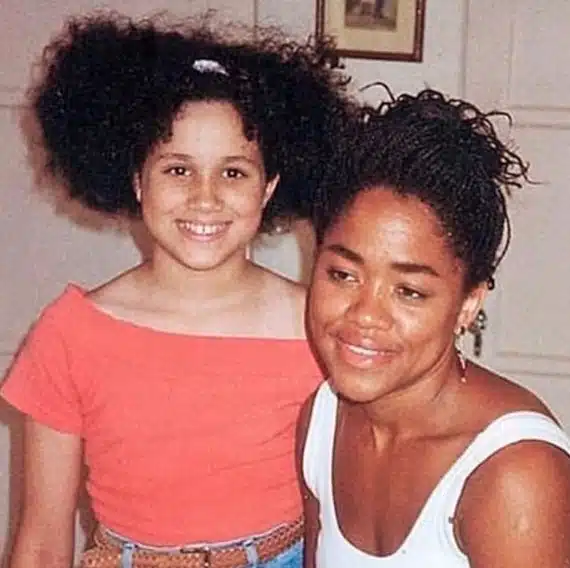
Meghan Markle, now widely known as a public figure and the wife of Prince Harry, grew up far from the royal spotlight in Los Angeles. Born in 1981 to Doria Ragland, an African American social worker and yoga instructor, and Thomas Markle, a white television lighting director, Meghan spent much of her childhood navigating life as a biracial child in a society where identity could often be misunderstood. She has spoken publicly about feeling caught between worlds because of her mixed heritage. Her parents worked long hours in their respective professions, and Meghan has described aspects of her early life as that of a “latchkey kid,” meaning she often returned home from school to an empty house. Despite the modest circumstances, she has repeatedly said that her parents worked hard to provide opportunities for her and encouraged her curiosity and independence.
Growing up, Meghan frequently spent time around the entertainment industry because of her father’s job in television. Thomas Markle worked as a lighting director on several productions, including the sitcom Married… with Children. Meghan sometimes visited the set while he worked, which gave her early exposure to how television shows were produced. Although she would later pursue acting herself, she has said that during childhood she primarily focused on academics and considered herself more of a “nerd” than a typical aspiring performer. Her early life included ordinary routines—school, homework, and family outings—combined with the unique experience of occasionally being around film crews and studio environments.
One of the earliest widely documented moments of Meghan’s activism occurred when she was only eleven years old. After seeing a television commercial for dish soap that described women as the primary people responsible for kitchen cleaning, she wrote letters to several organizations to protest what she believed was a sexist message. The letters were sent to companies and public figures, and the advertisement was eventually changed to remove gender-specific wording. The incident later became an example she cited when discussing the importance of speaking up against unfair treatment or stereotypes. It also illustrated an early willingness to challenge social norms and advocate for equality, something she would continue to emphasize in later public work.
As Meghan grew older, she pursued higher education and eventually began working toward a career in acting. Her breakthrough role came when she was cast as Rachel Zane on the legal drama Suits, which aired for several seasons and gained an international audience. The role brought her global recognition and established her as a television actress. During those years she also maintained a lifestyle blog and participated in charitable initiatives focused on women’s empowerment, education, and social issues. Her work as an actress and public advocate gradually built a profile that extended beyond the entertainment industry.
In 2016, Meghan’s life changed significantly after she met Prince Harry, a member of the British royal family. Their relationship quickly attracted worldwide attention. Two years later, in 2018, the couple married in a ceremony at Windsor Castle, an event watched by millions around the world. After their marriage they were given the titles Duke and Duchess of Sussex. The couple later stepped back from official royal duties and moved to the United States, where they began focusing on independent media projects, philanthropic work, and family life. They have two children together: Prince Archie of Sussex, born in 2019, and Princess Lilibet of Sussex, born in 2021.
In recent years Meghan has spoken more openly about personal challenges she experienced during motherhood. During a conversation on her podcast with Whitney Wolfe Herd, the founder of Bumble, she revealed that she experienced Postpartum preeclampsia, a rare but potentially serious medical condition that can occur after childbirth and involves high blood pressure and other complications. Meghan explained that dealing with such a health scare while caring for young children was frightening and emotionally difficult. In addition, she had previously shared another deeply personal experience—suffering a miscarriage—which she wrote about publicly in an essay for The New York Times. By discussing these issues openly, she said she hoped to help reduce stigma and encourage more honest conversations about maternal health and loss.