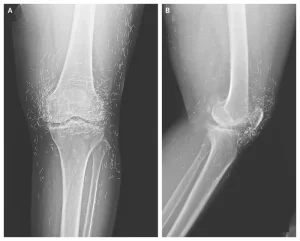
A routine X-ray revealed a startling surprise when doctors examined the knees of a 65-year-old woman suffering from severe joint pain. What appeared at first glance to be a standard imaging scan of osteoarthritis turned out to be far from ordinary. The X-ray showed hundreds of tiny gold needles embedded deep in her knee tissue, a discovery that left medical professionals both intrigued and concerned. The woman, whose identity was kept private, had sought relief from chronic pain that had progressively worsened over the years, leading to stiffness and limited mobility. When traditional medical interventions failed to alleviate her discomfort, the decision to pursue alternative therapies ultimately revealed an unexpected risk of unconventional treatments. This case underscores the sometimes-unseen consequences of popular complementary medicine practices and offers a cautionary tale about the balance between seeking relief and exposing oneself to potential harm.
The patient had been battling osteoarthritis for many years, a degenerative condition that gradually wears down the cartilage cushioning the joints, causing pain, swelling, and stiffness. Osteoarthritis is among the most common causes of joint pain in older adults, affecting millions worldwide and often limiting everyday activities like walking, climbing stairs, or even standing for long periods. Standard medical treatments for osteoarthritis include nonsteroidal anti-inflammatory drugs (NSAIDs), pain relievers, physical therapy, and, in severe cases, joint replacement surgery. In her case, these conventional therapies offered only partial relief. Painkillers and anti-inflammatory medications temporarily reduced discomfort but also caused side effects, including stomach irritation and digestive problems, leaving her searching for alternative solutions. It was this search that led her to acupuncture, a traditional therapy that has long been valued in many Asian cultures for its purported ability to relieve pain and restore balance to the body.
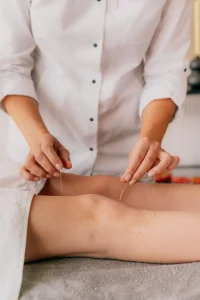
Acupuncture involves inserting thin needles into specific points on the body, aiming to stimulate nerves, muscles, and connective tissues to promote natural healing and improve bodily functions. In most modern applications, the needles are removed shortly after treatment, typically within 20 to 30 minutes. However, in this patient’s case, the treatment went a step further: gold needles were implanted and intentionally left within the joint tissue to provide continuous stimulation. Known as gold thread acupuncture or “embedded acupuncture,” this method is more common in parts of Asia, including South Korea, where it is sometimes used as a long-term solution for chronic pain conditions such as arthritis. The rationale behind this approach is that the small gold implants can slowly stimulate the affected area, theoretically offering prolonged relief. While proponents claim that gold’s biocompatibility and durability make it an ideal material for long-term implantation, the scientific evidence supporting its effectiveness is limited and largely anecdotal.
Medical experts, however, warn that leaving foreign objects inside the body can carry significant risks. Dr. Ali Guermazi, a radiology professor at Boston University who reviewed similar cases, emphasized that the human body naturally reacts to foreign materials, often resulting in inflammation or fibrous tissue formation around the object. In some cases, retained needles can become infected, or abscesses may form around the metal, creating complications that require surgical intervention. Additionally, embedded needles can interfere with future medical imaging, obscuring critical anatomical details on X-rays or CT scans. Perhaps most dangerously, patients with metal implants should never undergo an MRI scan, as the strong magnetic fields could cause the needles to move, potentially puncturing blood vessels or damaging surrounding tissue. While acupuncture is often regarded as a low-risk procedure, these extreme forms of the therapy highlight how alternative practices can carry unforeseen hazards when taken beyond conventional protocols.
Despite these risks, acupuncture and related procedures remain widely practiced, particularly in East Asian countries where traditional medicine is highly integrated into healthcare systems. In South Korea, gold thread implantation and long-term needle insertion are relatively common approaches for patients seeking relief from arthritis or chronic joint pain. Advocates argue that these techniques provide durable stimulation and can reduce pain over extended periods, but clinical studies validating these claims remain limited. Even in the United States, acupuncture has gained popularity over the past few decades. According to the National Institutes of Health, in 2007, approximately 3.1 million adults and 150,000 children received acupuncture treatments, primarily for pain management and musculoskeletal conditions. However, cases like this woman’s highlight the need for caution, as the practice of embedding needles permanently is far less common and largely unregulated outside of certain specialized clinics in Asia.
The woman’s case was recently documented in the New England Journal of Medicine, drawing international attention from both medical professionals and the general public. Her X-rays, showing hundreds of tiny gold needles deeply embedded in her knee tissue, serve as a powerful visual reminder of the potential consequences of extreme alternative therapies. While the procedure may have been intended to help alleviate her suffering, it also exposed her to risks that could complicate future treatments and imaging studies. Experts stress that patients considering acupuncture should be fully informed about the type, frequency, and potential side effects of any treatment, especially when permanent implants are involved. In the end, her experience underscores a broader lesson: the pursuit of pain relief must be balanced with a careful understanding of medical risks, informed decision-making, and consultation with qualified healthcare providers. Cases like hers remind both practitioners and patients that even seemingly harmless alternative therapies can carry serious, sometimes life-altering consequences when used outside standard guidelines.