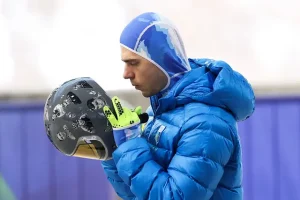
After a Ukrainian skeleton racer was banned from competing at the 2026 Winter Olympics because of the helmet he chose to wear, a billionaire philanthropist has stepped forward with a donation of more than $200,000 to support him — a gesture seen by many in Ukraine and beyond as both symbolic and deeply meaningful. The athlete at the center of the controversy, Vladyslav Heraskevych, had hoped to honor fallen Ukrainian sportspeople killed in Russia’s invasion of his homeland by designing a custom helmet featuring their images. What began as a personal act of remembrance became an international flashpoint, raising questions about free expression, the role of sport in political conflicts, and how global sporting institutions handle sensitive geopolitical realities. Heraskevych, 27, had trained for years to compete at the Olympic level, and his exclusion from the Games in Milan‑Cortina 2026 stunned many who saw his tribute not as political but as a human act of mourning and solidarity.
Heraskevych’s “helmet of remembrance” was intended to honor dozens of Ukrainians — including athletes, coaches, and young sports stars whose lives were cut short by war. Among those featured were the late teenage weightlifter Alina Perehudova, popular boxer Pavlo Ischenko, ice hockey player Oleksiy Loginov, actor‑athlete Ivan Kononenko, diving coach Mykyta Kozubenko, shooter Oleksiy Habarov, and dancer Daria Kurdel, among others. Each of these figures had been celebrated within Ukraine’s sporting community for their dedication, talent, and spirit, and many had become symbols of courage in the face of adversity. For Heraskevych, the images were deeply personal — more than decals on a helmet, they were beloved human beings whose memories he felt obligated to carry with him as he represented his country on the world’s biggest stage.
However, what to some was an emotional tribute was interpreted by officials at the International Olympic Committee (IOC) and the International Bobsleigh and Skeleton Federation (IBSF) as a violation of Olympic rules concerning political expression. The IOC has strict guidelines about partisan messaging at the Games, rooted in Article 50 of the Olympic Charter, which prohibits “any kind of demonstration or political, religious or racial propaganda” at Olympic venues. Organizers argued Heraskevych’s helmet constituted a political statement, even though the athlete continuously insisted his intent was purely commemorative rather than political. When asked to remove or alter the helmet so it complied with IOC rules, Heraskevych refused, saying he could not — and would not — remove the faces of his friends from his equipment out of respect and remembrance.
The dispute quickly escalated as Heraskevych appealed the ruling. He first contested the decision with the IBSF jury, which upheld the ban, determining that his helmet breached the federation’s interpretation of permissible athlete expression. Undeterred, Heraskevych took his case to the Court of Arbitration for Sport (CAS) — the independent body tasked with resolving international sports disputes. Athletes and legal observers alike watched closely as the former case could set precedent on how far rules governing neutrality extend during times of war. Nevertheless, just hours before the final two runs of his skeleton competition — the climax of the event he had trained so hard to reach — CAS dismissed his appeal. That decision effectively ended his Olympic pursuit before it could properly begin.
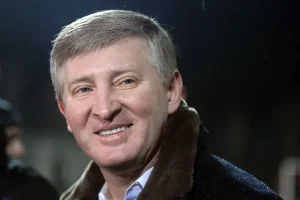
In the wake of his exclusion, a powerful supporter emerged: Rinat Akhmetov, the Ukrainian oligarch who is also the owner and president of Shakhtar Donetsk Football Club. Akhmetov announced that he would donate more than $200,000 — an amount equivalent to the financial reward Ukraine gives athletes for winning an Olympic gold medal — to Heraskevych to support both his athletic career and his broader mission of remembrance. In a statement released through the club, Akhmetov praised Heraskevych’s courage and character, saying that although the athlete was denied the chance to compete for Olympic glory, he returned home “a true winner” because of the respect and pride he had earned among Ukrainians. The donation, Akhmetov said, was meant to give Heraskevych the “energy and resources to continue his sporting career, as well as to fight for truth, freedom and the remembrance of those who gave their lives for Ukraine.”
Akhmetov’s gesture has drawn widespread attention both inside and outside Ukraine, where many observers noted the stark contrast in how nations reward their Olympic champions. In Ukraine, a gold medal brings not only national acclaim but also a significant monetary award, symbolizing the government’s recognition of sporting excellence. By matching this sum, Akhmetov’s donation served as a de facto acknowledgment of Heraskevych’s moral victory, even if he had not won on the ice track. Comparisons were drawn with other countries such as Singapore, where gold medalists may receive bonuses of over $500,000, underscoring the varied ways in which nations value and compensate athletic achievement. More importantly, the donation affirmed that for many Ukrainians, Heraskevych’s act of remembrance transcended sport and represented a form of cultural and national resistance.
Responses from Olympic officials have emphasized the IOC’s desire to remain neutral ground for competition, even as they express sympathy for athletes caught in conflict situations. IOC spokesperson Mark Adams, speaking at a news conference in Milan‑Cortina, acknowledged that the committee understood the emotional impulse to remember lost colleagues and friends and noted that countless athletes around the world had been affected by wars and crises. However, Adams reiterated that the IOC must enforce its guidelines consistently so that the Games remain a space free from political or ideological influence. “It’s fundamental that there are equal rights for all athletes and that the Games need to be separated not just from political and religious, but from all types of interference so that all the athletes competing can concentrate on their performance,” he said. Even so, in recognition of Heraskevych’s specific circumstances, the IOC permitted him — and other athletes in similar positions — to wear a black armband during competition as a sanctioned gesture of mourning. This compromise, while welcomed by some, did little to alter the outcome for Heraskevych’s Olympic journey.
The controversy surrounding Vladyslav Heraskevych’s helmet has ignited debate across media, sports communities, and human rights organizations about the role of politics and personal expression at global sporting events. Supporters argue that expecting athletes to leave their identities — including their cultural and emotional realities — at the door is unrealistic and unfair, especially during times of conflict that directly affect them and their families. Critics of the IOC’s decision suggest that in a world where geopolitics increasingly impacts international sport, governing bodies must evolve to accommodate the lived experiences of athletes without resorting to blanket prohibitions. Others maintain that the IOC’s strict neutrality rules are vital to preserving the Olympic spirit, which aspires to bring together nations and competitors in peace, even if global tensions are unavoidable.
For Heraskevych, the experience has been a profound mix of disappointment, resolve, and affirmation. Though his Olympic dreams were cut short, he returned to Ukraine with public respect and financial support that may sustain his future in the sport and beyond. The donation from Rinat Akhmetov not only provides tangible backing but also sends a message about the intersection of sport, memory, and national identity. In the months ahead, Heraskevych is expected to continue advocating for those he sought to honor with his helmet — ensuring their stories remain known beyond headlines and historical footnotes. Even without Olympic medals, he has already become a symbol for many who view his actions as emblematic of Ukraine’s resilience, reminding the world that sometimes the greatest victories are not won on podiums but in the courage it takes to stand up — and stand out — for what one believes is right.