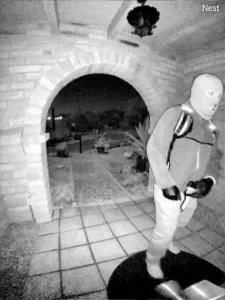
The disappearance of 84-year-old Nancy Guthrie, mother of “TODAY” show co-anchor Savannah Guthrie, has captivated the nation, blending personal tragedy with intense public scrutiny. The case, already high-profile due to the family’s prominence, escalated dramatically after ransom notes surfaced demanding $6 million for Nancy’s return. The shocking demands prompted widespread media coverage and online speculation, drawing both sympathy and concern from the public. Authorities have confirmed that Nancy was forcibly taken from her home, though few details about the circumstances have been publicly released. Law enforcement agencies are investigating the scene meticulously, searching for any trace of physical evidence that might shed light on what happened. Despite extensive efforts, the investigation has yielded little concrete information, leaving the Guthrie family and the public in a state of anxious uncertainty. Every lead, from blood drops found near her home to digital forensics around the property, has been scrutinized, yet the mystery deepens with each passing day. As the case unfolds, questions about the authenticity of the ransom notes, the possibility of foul play, and Nancy’s current condition dominate both media narratives and public discussions.
Adding a layer of skepticism to the unfolding drama, former FBI Assistant Director Chris Swecker has publicly raised doubts about the kidnapping claims and the ransom demands. Speaking to Fox News, Swecker questioned whether the disappearance truly follows the pattern of a conventional kidnapping-for-ransom case. “I’m very skeptical of this,” Swecker stated. “Is this really a kidnapping? Does somebody really have her, and is she really alive?” He emphasized that kidnappers typically provide proof of life to verify that the victim is in their control, a standard step that has not been observed in Nancy’s case. The lack of photographic or video evidence fuels his doubts and suggests, at least to some experts, that the case may involve opportunists exploiting the family’s emotional vulnerability rather than an actual criminal holding Nancy hostage. Swecker’s comments have been widely reported and have sparked debate among both law enforcement analysts and concerned citizens, illustrating the complexity of interpreting evidence—or the lack thereof—in high-profile disappearances. By raising these questions, he underscores the importance of measured skepticism and careful verification in cases where public pressure and emotional intensity can obscure facts.
The Guthrie family has responded to the ransom demands with a mixture of desperation and hope, publicly expressing their willingness to comply with the financial requests if it could ensure Nancy’s safe return. Savannah Guthrie, speaking on social media, implored the abductors to release her mother. “We received your message, and we understand,” she said in a heartfelt video. “We beg you now to return our mother to us so that we can celebrate with her.” These messages reveal not only the family’s deep anguish but also the intense psychological pressure they are facing, as they navigate uncertainty, media attention, and the challenge of deciding whether to engage with potential criminals. Despite their willingness to meet the demands, the family has continued to rely on law enforcement guidance, carefully balancing their emotional reactions with strategic caution. The public nature of these statements has amplified attention on the case, encouraging tips and potential leads, but it has also exposed the family to criticism, speculation, and the risk of manipulation by individuals seeking to exploit their grief.
The investigation into Nancy Guthrie’s disappearance remains complex and filled with uncertainty. Law enforcement agencies, including federal and local authorities, have conducted extensive searches of her home and surrounding areas, including detailed examinations of the property’s septic system and nearby terrain, yet no definitive trace of Nancy has been discovered. The case has also been complicated by multiple ransom notes, with the demands escalating from an initial $1 million to $6 million, suggesting either inexperience, opportunism, or manipulation by those behind the communications. Blood drops found outside her home indicate that a struggle may have occurred, reinforcing the possibility of a forced abduction, but the limited evidence makes it difficult to draw clear conclusions. Investigators are treating every piece of information with caution, knowing that any misstep could compromise the case or endanger Nancy if she is indeed alive. The ongoing uncertainty has created a tense atmosphere, where hope, fear, and speculation intermingle, leaving both the family and the public grappling with the unknown.
Chris Swecker has further cautioned that the Guthries may be contending with opportunists rather than genuine kidnappers. “I really think there’s a third party here that’s just playing with them,” he remarked, noting that high-profile cases often attract individuals who seek to exploit publicized grief for personal gain. This perspective is supported by law enforcement experts, who acknowledge that false ransom notes or deceptive communications are not uncommon in cases involving prominent families. Swecker’s insights highlight a critical distinction between apparent evidence and verified facts, emphasizing that even when threats appear credible, careful analysis is essential before taking action. His warnings also underscore the need for families and authorities to coordinate closely, ensuring that emotional responses do not inadvertently jeopardize investigations or place the victim in additional danger. The intersection of media scrutiny, public interest, and high-stakes criminal investigations creates a uniquely challenging environment in which law enforcement must operate with both speed and caution.
As the investigation enters its ninth day, the search for Nancy Guthrie remains urgent and unresolved. Authorities continue to pursue all viable leads, from forensic evidence at the home to potential digital footprints that could reveal the movements of perpetrators or the victim. The family’s public appeals, combined with ongoing media coverage, have mobilized widespread public awareness and support, but tangible progress has been limited. Analysts emphasize that patience, meticulous evidence gathering, and careful interrogation of potential leads are vital, particularly in cases involving elderly victims or high-profile families. The emotional toll on the Guthries is immense, compounded by daily uncertainty and the pressure of national attention. Yet despite these challenges, the combined efforts of law enforcement, forensic teams, and the family’s advocacy maintain a forward momentum, as every passing day carries both the potential for tragic outcomes and the hope for a resolution that could bring Nancy safely home. In this context, the case not only highlights the vulnerabilities of the elderly but also reflects broader societal questions about crime, media influence, and the balance between public involvement and investigative discretion.
In conclusion, Nancy Guthrie’s disappearance is both a personal tragedy and a complex criminal investigation, marked by ransom demands, skepticism from experts, and intense public attention. While the family has expressed willingness to comply with demands, authorities remain cautious, emphasizing verification and thorough analysis in the absence of proof of life. Former FBI agent Chris Swecker’s doubts about the authenticity of the kidnapping claim underscore the potential for manipulation and opportunism in high-profile cases. Law enforcement continues to investigate diligently, analyzing both physical evidence and digital communications in the hope of uncovering definitive leads. Meanwhile, the Guthrie family navigates a fraught emotional landscape, seeking guidance, support, and the safe return of Nancy. As the investigation progresses, the nation watches closely, hoping for clarity, accountability, and ultimately, a resolution to a case that underscores both the fragility of personal safety and the challenges of modern criminal investigations.